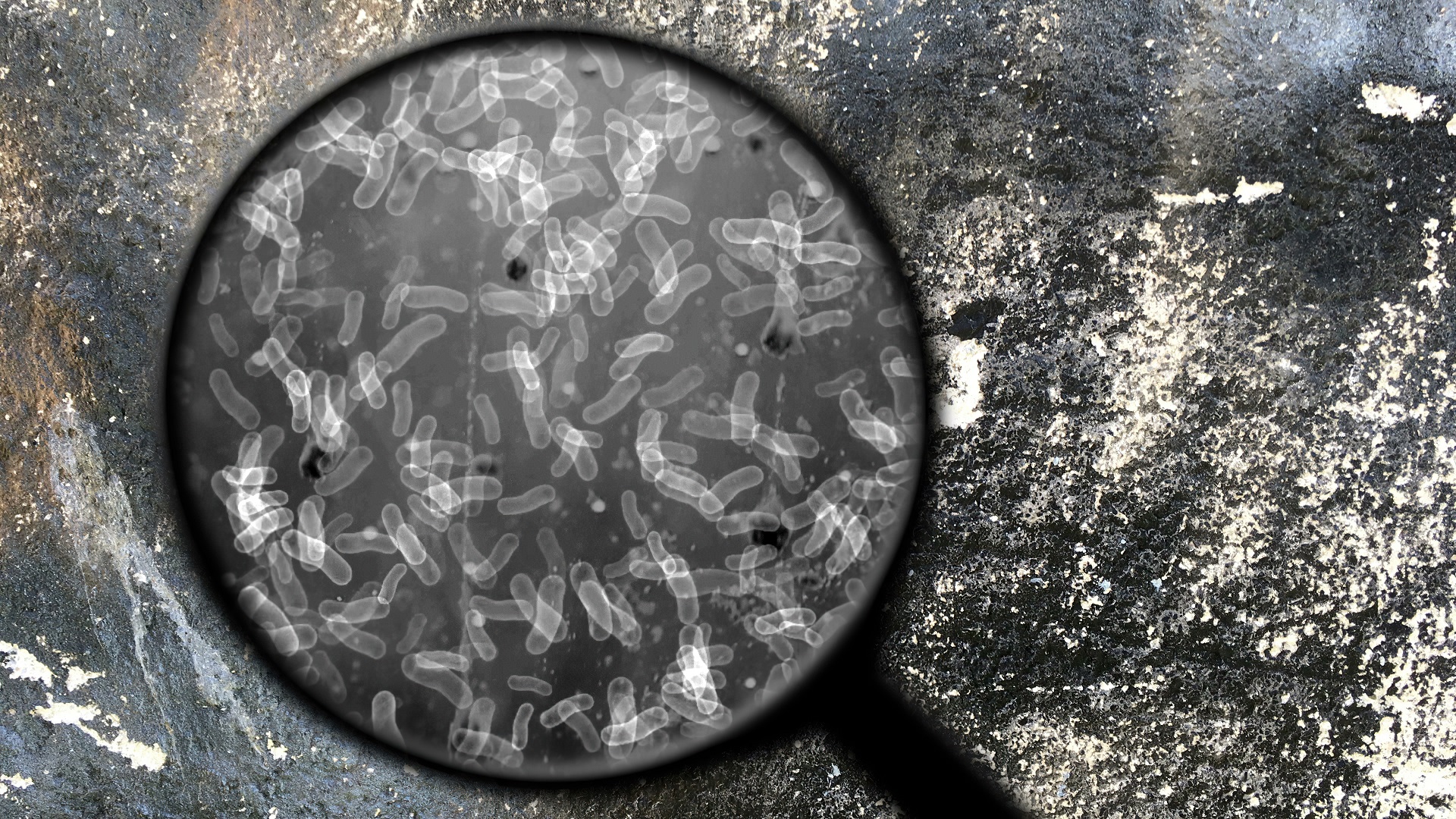
The images above represent microBIOMETER® soil testing results one year apart which show the mB levels have improved over 40%.
David Bray serves as the agriculture and livestock consultant for Omnicrobe Natural Solutions, an all-natural microbial amendment, and represents the company throughout the United States.
Omnicrobe Natural Solutions has performed soil tests in Texas, Oklahoma, and Kansas on a variety of crops. Their SOIL2 product breaks down the nutrients that are in the soil to become more readily available to the plant root system. Applying SOIL2 lessens the demand for fertilizer by utilizing the nutrients’ that are existing. They use microBIOMETER® to establish a base line reading then retest at various phases to determine how the soil is progressing.
Being able to track the microbes in the soil to determine the amount of SOIL2 microbes to apply, has proven beneficial to rebuild and maintain healthy soil. Application of SOIL2 can vary from in-furrow application, broadcast spray, irrigation, or drip tape.
David Bray was born and raised in Southwest, Oklahoma. He graduated from Cameron University, Lawton, OK with a degree in Agriculture Education and a minor in Agronomy. Retired from public education in July 2022, his passion now lies in plant and animal health,; leading to a healthier human.
Worm Power, a world leader in organic vermicompost products, helps growers improve crop yield and plant performance through increased root development and plant nutrient uptake. Worm Power’s Vermicompost Liquid Extract is shelf-stable soil amendment from liquid worm castings that have hundreds of diverse bacteria species.
The company currently utilizes the microBIOMETER® test to evaluate field trials on how their product is impacting the soil when compared to an untreated control. They like having the ability to show growers that the product is functioning as intended for increasing microbes in the soil.
Many specialty crops sterilize the soil to avoid pathogens. The addition of Worm Power’s products strives to bring soil back to a healthy and functional microbiome. microBIOMETER® provides the grower a visual measurement of the microbial community over time and the improvements gained with each application of their product. Healthy soils promote healthy plants and having a diverse microbe population is critical to this process and the microBIOMETER® provides a great tool to support their efforts.
“microBIOMETER® lets us see immediate results rather than waiting to see the increase in yield at the end of the season.”

You’ve probably read how important it is for your soil to have a large, diverse microbial population, but how do you know that all those microbes are good?
Well to start, a healthy and optimal microbial population in your soil will always have a mixture of good and bad microbes. Together, these microbes perform important tasks to keep the soil functioning and the plants flourishing. Despite the complex relationship between plant and soil microbes, research suggests that soil microbes play a significant role in nutrient cycling, structuring plant communities, influencing plant performance and growth, and in disease control, which is why it’s so important to have a dense and diverse microbial community.
Thankfully, these soil microbe-plant interactions are self-regulated. And to keep these microbes functioning and plants thriving as they should, there’s a system of checks and balances that occurs within soil. For example, in a healthy, diverse soil mixture, microbes help plants suppress pathogens by inducing natural plant defenses, producing antibiotics, fighting against pathogens, or through the hyperparasitism of the pathogen. However, when there is an influx of pathogens in a not-so-healthy and diverse soil, things will start to function differently.
Once there’s a large enough influx of pathogenic microbes that have colonized within the soil, these microbes will produce chemical signals called autoinducers, which regulate microbial gene expression in a process called quorum sensing. In this example, quorum sensing allows those microbes to communicate with each other and change their genes to become virulent. Soil can become more susceptible to virulent factors if there isn’t adequate microbial diversity, as a diverse microbial community is critical to maintain ecological processes. To mitigate the negative aspects of quorum sensing, it’s imperative to have a diverse vegetation aboveground and a diverse microbial community belowground.
However, despite the good microbes’ best effort, soil conditions change and sometimes pathogens can take control. Depending on the pathogen, different physical signs and symptoms will become evident on the plant. Common signs of pathogenic disease on a plant can include foliage wilting, stunting, browning, and yellowing. Fortunately, because these are all aboveground symptoms, diseases can be easier to identify and potentially treat. Though, there are common belowground pathogens that affect the root systems of plants. These are more difficult to diagnose as they don’t always produce physical signs on the plant. The only way to specifically identify the pathogenic microbial species within your soil is to send your soil’s DNA to a lab for further analysis.
The best method that researchers have found to combat these soil pathogens is by supporting the good microbes, as the best defense is a good offense. Because microbial diversity has an almost linear relationship to microbial biomass, increasing the soil’s microbial biomass will increase its microbial diversity, which is the key to having a functioning and thriving ecosystem.
A teaspoon of healthy soil contains billions of microbes.
Microbes feed the plants, strengthen their roots, and increase their yields. A plant sends signals to attract the microbes it needs at any given moment. In chemical-free agriculture, there is a good marriage between plants and microbes. In a complex, self-regulating system, plants and microbes work harmoniously, nourishing each other.
The chemistry of a plant sends specific nutrients to attract microbes to strengthen its immunity. The plant is not only capable of diagnosing its needs, it also makes its own medicine. When chemicals interfere with self-regulation, the plants are weakened. What should you do to improve the health of your plants? Build your microbial biomass by building your soil. Soil structure is the microbial home. A couple ways to build your soil structure are composting and cover crops. The roots in the soil are home to microbes. In nature, soil is covered, not fallow. The global soil degradation and desertification affects us all.
The microbes found in soil are also found in our gut. The health of the soil impacts the nutritional value of our food and our health. The immunity of a plant impacts our own immunity. What we eat is essential to our own wellbeing. By taking care of the land and our agriculture, we are also taking care of ourselves. In this interview with Dr. Judy Fitzpatrick, microbiologist and diagnostic developer, we deepen into the importance of microbial biomass, the ratio of fungi to bacteria, plant – and human – immunity, and how to build soil
structure.
This article was featured in the April 2022 issue of Heart & Soil Magazine Rooted in Wisdom.
Click here to listen to the full interview on Heart & Soil TV.

The microbial population or microbial biomass (MB) reflects soil fertility. For over 2 million years, plants and soil microbes have worked together to create what we call fertile “soil”.
How do they work together? The plant supplies the microbes with carbon rich food. The microbes then mine the soil for the required minerals. Microbes can actually manufacture nitrogen and antibiotics that protect the plant from pathogens in return creating carbon stores that build soil structure and sequester carbon.
Like all good partners, what is good for one is good for the other, i.e., a healthy MB predicts a healthy plant. Therefore, supplying NPK directly to plants disrupts the plant microbe relationship – plants no longer feed the microbes and the MB decreases accordingly. Soils with low MB suffer from erosion, compaction, and poor structure. Sadly, this is how we have lost 50% of the earth’s soil.
Soil microbes, like all living things, need food. They need to be fed carbon and nitrogen from plants or organic matter so they can mine the minerals, P, K, Mg, Cu S etc. from the soil. If there is not enough of any nutrient, including the minerals that should be in the soil, it negatively affects the number of microbes; just as humans do not thrive when we are deficient in a critical nutrient.
Oxygen, water, and an agreeable pH and temperature are also important for soil microbes. Compacted soil is low in oxygen and microbial biomass. As soil dries, microbes die or become dormant. MB is much lower in low and high pH soils than in those that are in the neutral range. This is because most enzymes work best at neutral pH and all metabolism is enzyme dependent. MB also contracts during intense cold and heat. Plant roots require these same conditions
Microbes also need shelter to survive. Soil aggregates provide small cubbyholes that accommodate oxygen and water. It is in these areas where microbes attach themselves to be protected from predators. These predators are larger than they are; think of how little fish hide in coral. Not only are soil aggregates homes for microbes, they are homes built by microbes. The capsular material that microbes secrete to attach themselves to soil particles is long lasting. It binds the soil particles, therefore, creating aggregates that build soil structure and prevent erosion. These aggregates provide the water, oxygen and wiggle room needed by plant roots.
Furthermore, soil microbes build up carbon in the soil by producing humic matter. When microbes die, their bodies become stored carbon. This is good for microbes in the way that a savings account is good us. It is important for the soil as well because the humic matter increases soil structure. This allows more oxygen and water storage. It is also a resource that microbes can take a loan from before harvest when plant material is not being released to microbes. For too long we have relied on microbes borrowing from this humic carbon source and have released ½ of the soils stored carbon to the air as carbon dioxide. This has contributed to climate change and loss of 50% of earth’s soil. Microbes have always worked well with plants to create soil and they can help us restore exhausted soils back to fertility.
Arbuscular mycorrhizal fungi (AMF) penetrate the root and establish little areas in plant root cells where they can exchange nutrients with the plant. AMF improves the nutrients available to the plant by collecting soil minerals such as phosphorous, nitrogen, magnesium and manganese through an extensive network of fine fibers (hyphae) that increase the absorptive area of the root up to a hundred-fold. In return the plant feeds the fungi carbohydrates and lipids. AMF secrete hormone like substances that stimulate plant growth and AMF encourages the establishment of nitrogen fixing bacteria. The AMF boost to plant growth comes not only from the nutrients it supplies. AMF also improves the immune response of plants making them resistant to harmful nematodes and insects as well as fungal and bacterial pathogens.
AMF shows great promise in compensating for yield losses when chemical fertilizers are eliminated or greatly reduced. AMF can reduce the need for pesticides and phosphate and nitrogen fertilizers cutting back on input costs all while building healthier soil.
In light of the known importance AMF plays in your plant’s health, microBIOMETER® now provides the fungal to bacterial ratio of your soil. This information will further assist you on your road to healthy soil while helping you lower your costs.
Leifheit, E. F., Veresoglou, S. D., Lehmann, A., Morris, E. K., & Rillig, M. C. (2014). Multiple factors influence the role of arbuscular mycorrhizal fungi in soil aggregation—a meta-analysis. Plant and Soil, 374(1-2), 523-537.