
Remember when you needed expensive equipment just to know what’s happening in your soil? Well now that same device you use to scroll social media and read the news can analyze soil health with lab-quality precision.
The Science Behind Your Pocket Soil Lab
Your smartphone possesses something laboratories have relied on for decades: sophisticated optical sensors and powerful processing capabilities. Modern smartphones can detect color variations, light intensity, and chemical reactions through their cameras and built-in sensors. When paired with the right testing reagents and apps, these everyday devices transform into legitimate soil analysis tools.
The principle is surprisingly straightforward. Soil samples react with specific chemical reagents, producing color changes that correspond to different nutrient levels, pH values, or biological activity. Your phone’s camera captures these color variations, while specialized algorithms interpret the data and provide instant results.
What Your Mobile Soil Lab Can Actually Measure
You might wonder what kind of soil data you can realistically expect from smartphone-based testing. The capabilities are more extensive than you’d think:
Real-Time Results That Actually Matter
The game-changer isn’t just the technology—it’s the speed. Traditional soil testing means collecting samples, shipping them to a lab, and waiting days or weeks for results. And by then, growing conditions and microbial communities may have changed completely. Smartphone-based soil lab technology delivers results in minutes, not days. This real-time capability transforms how you can manage your soil health. And the microBIOMETER® can help you do just that.
Notice your tomatoes looking yellow in mid-July? Test the soil immediately and adjust your fertilization strategy that same afternoon. Planning fall amendments for your lawn in Texas? Test multiple spots across your property in a single morning and create a targeted improvement plan.
Getting Started: Your First Mobile Soil Analysis
Setting up your smartphone as a soil lab is simpler than you might expect. The microBIOMETER® includes testing reagents, measuring tools, and a smartphone app that guide you through the entire process step by step. You’ll collect a representative soil sample, mix it with the provided reagents, and use your smartphone’s camera to capture the resulting color changes. The app then analyzes the images and provides detailed reports about your soil’s condition. The testing process is quick and you can see results in 20 minutes.
The Technology Revolution Happening Now
All-in-one smartphone-based devices are becoming preferable for agricultural soil analysis, enabling users to complete self-assessments about soil quality and receive performance reports with actionable insights.
The implications extend far beyond individual gardeners. Extension services at universities across the United States are incorporating smartphone soil testing into their educational programs. Community gardens in both rural and urban areas are using these tools to optimize their growing strategies and share soil health data among members.
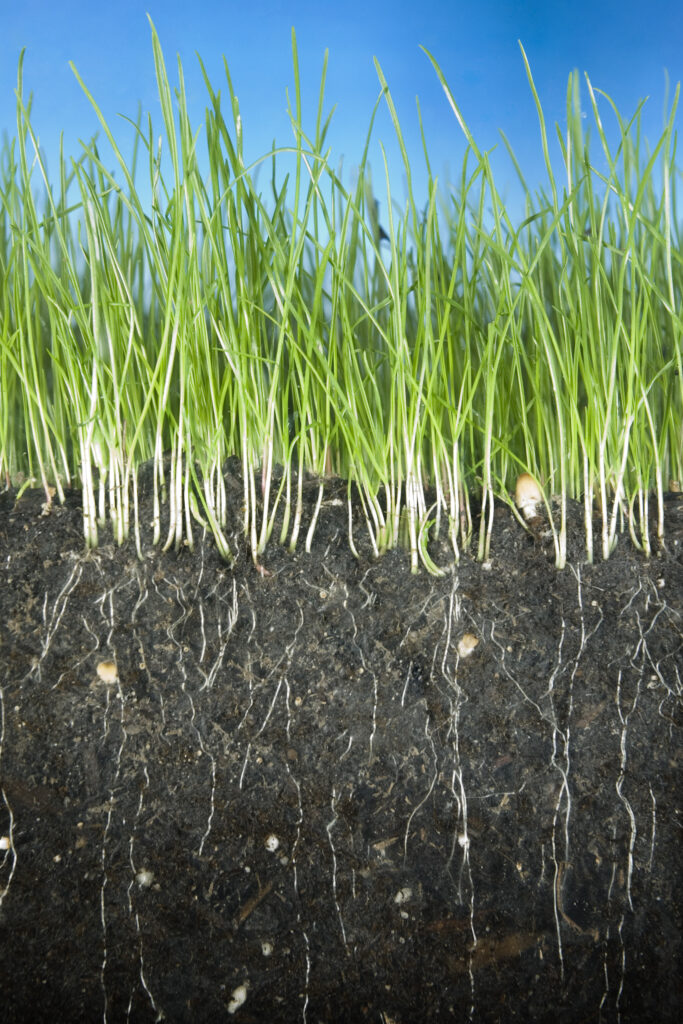
Here’s something that might surprise you: fungi represent one of the most diversified kingdoms on Earth, with estimates reaching up to 12 million species, yet only 150,000 fungal species are currently described. This massive knowledge gap hints at just how much we’re still discovering about these microscopic powerhouses that quietly drive soil health and ecosystem productivity.
The Hidden Network: Understanding Soil Fungi
Soil fungi aren’t just tiny mushrooms waiting to sprout after rain; They’re sophisticated organisms that form extensive underground networks. These thread-like structures, called hyphae, can extend for miles through soil, connecting plants and facilitating nutrient exchange across vast distances. Fungal biomass is particularly important due to its role as a biological bridge. While bacteria excel at breaking down simple organic compounds, fungi are up to 4x more effective at utilizing complex compounds like lignin and cellulose.
Carbon Storage Champions: The Fungal Advantage
Soil stores more carbon than the atmosphere and all living vegetation combined. Fungi play a major role in this process and recent studies have uncovered some fascinating details about their carbon storage capabilities. This challenges previous assumptions about soil carbon dynamics and highlights why fungal biomass matters more than we previously realized.
The Fungal-Bacterial Balance: Why Ratios Matter
Here’s where soil science gets really interesting. It’s not just about having fungi present; it’s about achieving the right balance between fungi and bacteria. Research using RNA sequencing, protein profiling, and isotope tracer techniques has shown that higher fungal-to-bacterial ratios are linked to altered carbon cycling and enhanced soil carbon storage.
The implications extend beyond carbon storage. Fungi contribute to:
Mycorrhizal Magic: Plant-Fungi Partnerships
The symbiotic relationship between plant roots and fungi, specifically mycorrhizal, is incredible. Mycorrhizal fungi form intimate partnerships with a majority of plant species, creating mutually beneficial exchanges that have evolved over hundreds of millions of years. These partnerships work like underground trading networks. Plants provide fungi with carbon-rich sugars produced through photosynthesis. In return, fungi extend the plant’s root system exponentially, accessing water and nutrients from areas the roots could never reach alone.
Environmental Restoration and Fungal Recovery
The importance of fungal biomass becomes even more apparent when examining ecosystem restoration efforts. Desertified system restoration shows that with recovery efforts, plant species richness and aboveground biomass increase significantly, along with improvements in soil organic carbon and total nitrogen. Fungi play a critical role in this restoration process. Their extensive hyphal networks help stabilize soil, reduce erosion, and create the foundation for plant community recovery. As fungal communities reestablish themselves, they facilitate the return of diverse plant species and accelerate ecosystem recovery.

The images above represent microBIOMETER® soil testing results one year apart which show the mB levels have improved over 40%.
David Bray serves as the agriculture and livestock consultant for Omnicrobe Natural Solutions, an all-natural microbial amendment, and represents the company throughout the United States.
Omnicrobe Natural Solutions has performed soil tests in Texas, Oklahoma, and Kansas on a variety of crops. Their SOIL2 product breaks down the nutrients that are in the soil to become more readily available to the plant root system. Applying SOIL2 lessens the demand for fertilizer by utilizing the nutrients’ that are existing. They use microBIOMETER® to establish a base line reading then retest at various phases to determine how the soil is progressing.
Being able to track the microbes in the soil to determine the amount of SOIL2 microbes to apply, has proven beneficial to rebuild and maintain healthy soil. Application of SOIL2 can vary from in-furrow application, broadcast spray, irrigation, or drip tape.
David Bray was born and raised in Southwest, Oklahoma. He graduated from Cameron University, Lawton, OK with a degree in Agriculture Education and a minor in Agronomy. Retired from public education in July 2022, his passion now lies in plant and animal health,; leading to a healthier human.
David Bray serves as the agriculture and livestock consultant for Omnicrobe Natural Solutions, an all-natural microbial amendment, and represents the company throughout the United States.
Omnicrobe Natural Solutions has performed soil tests in Texas, Oklahoma, and Kansas on a variety of crops. Their SOIL2 product breaks down the nutrients that are in the soil to become more readily available to the plant root system. Applying SOIL2 lessens the demand for fertilizer by utilizing the nutrients’ that are existing. They use microBIOMETER® to establish a base line reading then retest at various phases to determine how the soil is progressing.
 Founded in 2003 UK based Wildflower Turf Ltd has pioneered and developed a soil-less growing system which has transformed the concept of turf growing.
Working with soils a fair bit, it being the substrate into which their products are grown, they are interested in understanding the relationship between plants and soil. This involves investigating things such as soil structure, nutrient content, and more recently microbial content, at their R&D testing facilities in Hampshire.
They know that microbe-rich soil is beneficial for plant health. However, is there a relationship operating in the other direction? Does having a healthy plant population, or a more diverse plant population like the kinds of habitats they are trying to create with their products, influence the soil community or the type and scale of microbial activity in the soil?
To investigate this, they used a microBIOMETER® kit to conduct a study into the difference in microbial biomass of soils under meadows compared to lawns.
The results suggested that increased species richness above ground supports a larger amount of microbial life in the soil below. The meadow areas they tested, where there was around 14 species per m2 on average, had 42% higher microbial biomass than the lawns, which consisted of only a handful of species, and a 60% increase in the amount of fungi was also seen. Microbial biomass was therefore found to be positively correlated with species richness. So, they can demonstrate that there is some kind of positive interaction between the species richness of the planting scheme and the life in the soil below. And this corroborates evidence from a number of similar studies which have shown positive relationships between plant species richness and various soil factors.
This is very interesting research which leads them to believe that you should be able to improve the health of your soil just by increasing the diversity of your plants. Because they know that the more microbes and fungi there are, the more ecosystem services the soil will be providing. There’s more work to be done here to investigate this relationship, but just from this brief study they have found that the soil-plant interaction is much more complex than they were giving it credit for, and the benefits of biodiverse planting schemes like wildflower spaces are also more myriad than they imagined.
Previously they had focused on the importance of wildflower reintroduction for improving aboveground biodiversity, in the form of habitat for insects and birds for example. But they are just beginning to understand how important this habitat is for its relationship with the soil as well. It is their hope that research like this will continue and eventually feed into recommendations like Biodiversity Net Gain (BNG) in the UK, and the many benefits of improving soil health through soil organisms.
Founded in 2003 UK based Wildflower Turf Ltd has pioneered and developed a soil-less growing system which has transformed the concept of turf growing.
Working with soils a fair bit, it being the substrate into which their products are grown, they are interested in understanding the relationship between plants and soil. This involves investigating things such as soil structure, nutrient content, and more recently microbial content, at their R&D testing facilities in Hampshire.
 Amy Gardner of Kalispell, Montana serves farmers in the Flathead Valley as an agronomy coach through her business, Lower Valley Consulting Inc.
Amy has been scouting soil health trials as part of gathering third-party research for the company AgriGro. Farmers have been applying AgriGro’s prebiotic technology to boost soil health and in turn grow more productive and nutrient-rich crops. Amy uses microBIOMETER® to help compare soil microbiology in the control strips and where the prebiotics have been applied. Other data points collected for the trials have included plant counts, soil moisture, tissue tests, soil tests, vegetative cover percentages, GreenSeeker readings, and root, plant mass and health observations. So far 14 soil health trials have been performed in Montana and Idaho. More trials are scheduled for the Summer of 2023.
Amy Gardner was born and raised in Kalispell, MT. She has her BSc in Agricultural Education from Montana State University. Amy is a Certified Crop Advisor, as well as a Precision Ag Specialist, through the American Society of Agronomy. She is passionate about helping growers build healthy soils to produce high yielding and nutrient-rich crops through precision management. Her and her husband enjoy the Montana outdoors with their 5 boys.

Your soil is a unique mixture of sand, silt, clay, and organic matter. The particular make-up of your soil determines its color, texture, and nutrient storage capacity. Knowing your soil’s texture and nutrient storage capacity is important when deciding how much and how often to feed and water your plants. Some nutrients are more easily stored and attached to soil particles compared to others due to the strength of their electrostatic bond. As the famous saying goes, opposites attract – and this holds true in soil as well.
Mineral nutrients such as calcium, potassium, ammonium, and magnesium are called cations because they have positively charged ions. The ability to attract and hold onto these positive cations comes from negatively charged soil particles, called colloids, found in organic matter and clay. It’s important for these nutrient cations to attach to the soil colloids so that they can be supplied to the plant when needed. If the nutrient cations don’t attach, they’ll easily leach out during a time of rain.
However, like in most fair economic systems, the plant can’t just take these nutrients from the soil without giving something in return. For example, if a plant needs some potassium, it will have to exchange one of its cations for the soil’s potassium cation. Thankfully, plants produce hydrogen cations that they can use for this exchange. The soil accepts these hydrogen cations because they’ll be used in photosynthesis and respiration.
This exchange is easier than others because both hydrogen and potassium have a positive charge of +1. Calcium, on the other hand, has a positive charge of +2 and therefore requires two hydrogen cations for its exchange, making the process a bit harder. The higher the positive charge on the cation, the harder it becomes to exchange between the soil and plant. However, the bond between the higher charged cations and the soil is stronger than that of the lower charged cations. This exchange process occurs on the plant’s root hairs, which is why it’s important to have a strong, healthy root system for your plants. The amount of cations that can be retained within the soil is called Cation Exchange Capacity (CEC) Source: Jagdish Patel.
Understanding the CEC of your soil is important due to its strong influence on nutrient and water retention and availability, soil structure stability, and soil pH and fertility. Adding organic matter to your soil is one of the most effective ways of increasing your soil’s CEC and increasing the amount of exchange sites. The more exchange sites, the greater the ability for nutrients to be retained within the soil. Having a high CEC not only reduces leaching of nutrients, but also helps buffer your soil against pH changes.
While it’s very beneficial to have a high CEC in your soil, soils with a low CEC can still be managed successfully – they just have different requirements than soils with a high CEC. Low CEC soils need small, but frequent intakes of nutrients and water, rather than large, infrequent intakes due to their fewer exchange sites. Less exchange sites means less space to hold onto the incoming nutrients. And as microbes are actively involved in transforming nutrients to plant-available forms, it’s imperative to maintain suitable soil conditions for optimal microbial activity.
Many soil testing labs will provide you with your CEC levels which are reported in units of milli-equivalents per 100 grams of soil (meq/100 g). Average levels range from less than 10 for sandy soils and 50-100 for organic rich soils. Pure organic matter has a level of 200-400. Generally, 1-10 is considered low while 10-50 is considered moderate to high.

Seasonal dynamics are a major driver of soil microbial communities. Much like you and I, microbes are more active during some seasons, and more dormant during others. This can be attributed to the different responses microbes have to nutrient inputs, climatic conditions, and other soil properties. As there are a lot of factors that affect microbial activity, it can be difficult for farmers or researchers to make definitive statements regarding the relationship between their soil microbial communities and seasonal changes. Specifically, temperature, moisture content, and the existence of plant life are considered the most important factors affecting microbial growth and activity within a season.
The presence of plants on the soil has a large impact on microbial life. As plants form, they begin to cultivate microbes surrounding their roots by producing nutrients for the microbes to essentially feed on. As the microbial community grows, they undergo a series of processes allowing them to obtain nitrogen and mineral nutrients from the soil and then provide the nutrients back to the plant to stimulate growth. This is part of the symbiotic relationship between plants and microbes– they support each other through the mining of nutrients from the soil and sun.
Just like plant presence, temperature greatly influences soil microbial properties. During cold seasons, temperature is considered a major limiting factor of microbial activity, whereas water availability could be a limiting factor during the summer season. Soil temperature can affect organic matter decomposition and mineralization rates, thereby impacting microbial biomass and activity levels. Bare soil, or soil without any plants growing, will have lower microbial activity occurring, regardless of season. This is why researchers and land stewards have emphasized the planting of cover crops between growing seasons in regenerative agriculture– as cover crops can alter soil properties and increase the biomass and diversity of microbial communities. In the warmer or hotter seasons, the addition of cover crops can also help to mitigate how much heat the soil is absorbing.
Studies show that microbial activity in agricultural soils increases in the fall when compared to other growing seasons–likely due to an increased level of nutrients and soil organic matter from crop and plant residue post harvest. Throughout the wintertime, or non growing season, microbial activity and composition is thought to be stagnant, but stable. An increase in microbial activity is said to occur after the thawing of frozen soils and can be linked to the freeze-thaw cycle (FTC) that colder climates experience. As snow freezes over soil, it inhibits air diffusion from occurring, creating anaerobic conditions for the microbial communities and therefore altering the soil community structure. In turn, this causes an increase in denitrification, respiration, and production of greenhouse gases, which are being trapped under the frozen layer. Once temperatures begin to rise, the soil begins to thaw, allowing oxygen into the soil. This provides labile carbon and other nutrients to the soil, which increases microbial activity and biomass. However, once thawing occurs, those greenhouse gases that were once trapped, are released into the air. This exact dynamic between microbial activity and the FTC is still being debated due to different soil properties greatly affecting freeze/thaw rates and as researchers use different methodologies, making it difficult to compare results between studies.
But despite the controversy surrounding the exact relationship between microbes and seasonal temperature changes, researchers do agree that microbial biomass and activity are related to seasonal temperature fluctuations. They’ve found that generally, microbial biomass decreases once the temperature increases past a certain point. As temperature increases, there is also an increase in CO2 being released from the soil, which we refer to as respiration. So when more respiration occurs, more carbon is being put into the air. This respiration process is sensitive to temperature change, which is why it’s imperative to have a better understanding of the seasonal dynamics of microbial communities.
As soil microbial life varies naturally by season, it might be hard to differentiate the natural seasonal changes from the changes related to your regenerative growing practices. Understanding the short term seasonal dynamics of microbial communities in various soil conditions is key in furthering our understanding of soil biology. Documenting and analyzing periodic readings with microBIOMETER® can assist you in differentiating between natural and seasonal changes in your soil.
References:
Bates, Todd B. (2018, Oct 10). How Plants Harness Microbes to Get Nutrients. Rutgers.edu.
https://www.rutgers.edu/news/how-plants-harness-microbes-get-nutrients
Bizzell, E. (2018, April 16). Plants and the bacteria at the root of it all. ASM.org.
https://asm.org/Articles/2018/April/plants-and-the-bacteria-at-the-root-of-it-all
Gao H, Tian G, Khashi u Rahman M and Wu F (2022) Cover Crop Species Composition Alters the
Soil Bacterial Community in a Continuous Pepper Cropping System. Frontier Microbiology. 12:789034.
Jensen G, Krogstad K, Rezanezhad F and Hug LA (2022) Microbial Community Compositional
Stability in Agricultural Soils During Freeze-Thaw and Fertilizer Stress. Frontier Environmental Science. 10:908568.
McDaniel, M. D. and Grandy, A. S.: Soil microbial biomass and function are altered by 12 years of
crop rotation, SOIL, 2, 583–599, (2016).
onwuka B, Mang B. (2018) Effects of soil temperature on some soil properties and plant growth.
Adv Plants Agric Res. 8(1):34-37
Pietikäinen, J., Pettersson, M., & Bååth, E. (2005). Comparison of temperature effects on soil
respiration and bacterial and fungal growth rates. FEMS Microbiology Ecology, 52(1), 49–58.
Simon, E., Canarini, A., Martin, V. et al. Microbial growth and carbon use efficiency show seasonal
responses in a multifactorial climate change experiment. Communicati
 An interview with the San Antonio Food Bank who is using microBIOMETER® in their Farm and Garden Program.
How are you using microBIOMETER®?
We are using microBIOMETER to track the soil health on our farms, gardens and compost. This test allows us to understand if we are providing an environment for our crops to thrive. Because we grow fruit trees, herbs and annual edible crops the fungal to bacterial ratio helps us identify the current soil health and help us understand what strategies we can look to implement to improve that environment over time.
How does microBIOMETER® help people understand the importance of soil biology as opposed to the historical focus on soil chemistry?
Traditional soil tests give you a window into what nutrients are or are not available within your soil. It can give you insight into how much organic matter might be present in your soil, but not how you might work to track progress on soil health, diversity or improving your soil food web on an affordable level. While knowing the nutrient breakdown is helpful information it does not help you understand if you are providing an ideal environment for those micro and macro organisms to thrive and ultimately aid your crops or plants in receiving those nutrients and so much more. The microBIOMETER® test kit has helped us better understand our complex food web and what strategies we can do to create a more balanced environment for our crops and our soil.
How did the microBIOMETER® information assist you with your project?
This test helps us to educate not only our staff on soil health strategies, but also our volunteers and anyone who attends are Teaching Garden classes. The data we collect helps us to showcase how the strategies we are employing to improve our soil health are making a difference from season to season as opposed to every two years from a traditional soil test. That enables us to make better recommendations to our community of growers about ways they can improve their soil, too.

About the San Antonio Food Bank
The San Antonio Food Bank takes pride in fighting hunger, feeding hope in our 29-county service area. We believe that no child should go to bed hungry, adults should not have to choose between a hot meal and utilities, nor a senior sacrifice medical care for the sake of a meal.
Founded in 1980, The San Antonio Food Bank has quickly grown to serve 90,000 individuals a week in one of the largest service areas in Texas. Our focus is for clients to have food for today but to also have the resources to be self-sufficient in the future.
Fighting hunger is our number one priority but we also serve to educate and provide assistance in many other ways. We achieve this through our variety of programs and resources available to families, individuals, seniors, children, and military members in need.
Our Farm and Garden Program consists of two locations and six growing spaces, including two farms and the garden at the New Braunfels Food Bank. Together these areas total more than 100 acres and provide 300,000 pounds of fresh local produce annually to our 29-county service area. We utilize 5,000 volunteers annually to assist with our operation and to provide local produce to the community.
Our Farm and Garden Program strives to provide quality, local produce to the community and to provide resources to teach those in our community how to grow food for today and in the future. In order to meet those goals, we start with our soil. By understanding our soil biology and health we get a window into what is happening at the root level and better understand the environment where our crops live and how to make improvements so we are growing healthy plants and nutritious crops. We believe everyone deserves access to nutritious fruits and vegetables.
Our Teaching Garden classes provide information about the importance of soil and composting as a foundation for building soil diversity and health. We utilize cover cropping on the farms and in our gardens to reduce erosion, build soil fertility, reduce weed pressure and increase organic matter. We create and utilize composting to increase the diversity of our soil, divert valuable resources from the landfill and introduce the community to the benefits of composting at home or in the community.